Wednesday, December 2, 2009

Baby Princesses?!?


This is by far the one of the creepiest things I have seen relating to Disney and fairy tale characters. Why does this image of all the Disney princesses of babies even exist? Better yet why is it on the second page of google images about Disney princesses? This is just an example of how our society takes things and runs with them. These are grown women in diapers! They have breasts they are obviouslly not babies!!! I find this very disturbing and gross on many levels. Is this attractive to men? Who is this marketed for? Does anyone find this cute instead of disturbing? Things like this make me long to have Disney and it's images out og the popular culture and mass media. Ewww.

Monday, November 23, 2009

Princes

Today I stumbled across this image on the internet. It connected with a lot of things people were talking about in their presentations last week about what women are looking for in a man. I never thought about it the other way that Disney is not only teaching girls these are the attributes to look for in a man, but also they are teaching boys these are the things you must be in order to get a princess. I found this very interesting as we have rarely talked about it or thought about it from this viewpoint. Not only does it present an interesting viewpoint but the question at the bottom through me for a loop. The only people I can name are Aladdin, Prince Eric, and Prince Charming. I never realized I did not know the names of the other princes, this emphasizes the point we have been discussing that the princes are just there to move the story along. This seems more and more true given we don't remember anything about then, simplest of all being their names.

Saturday, November 21, 2009

Peach: Damsel In Distress?


This weekend I was watching my boyfriend and his friends play the video game Mario. It occurred to me while watching the game that the story we see throughout all the classic fairy tales has made it's way into the video game plots of today. Peach is a beautiful princess who has been captured by evil characters and hidden away. She is a classic damsel in distress, a woman in need of a strong man to rescue her. In comes Mario not your classic prince charming, actually an Italian plumber, but none the less he is her knight in shining armor, her savior. This video game marketed towards boys teaches the message we have referred to again and again throughout the semester. Women need men to come rescue them and save them from the problems of their lives. Peach does not try to escape on her own she waits for Mario her savior to come rescue her from danger. Boys are then playing the male role of saving females and this message is being taught as their job, their responsibility from a young age. Video games like this crop up all over reinforcing the classic knight and damsel in distress concept. Why do we still love and play these games regardless of the obvious stereotypes and warped message?

Friday, November 20, 2009

Disney For Boys


I thought the point that Felix brought up in his presentation and I some what touched on in mine about the Disney movies for boys was really interesting. He brought up that there are not very many Disney movies for boys that include actual characters and that most of the Disney films geared towards boys are movies about inanimate objects coming to life and talking ie. cars, monsters inc, etc. I think it is weird that there aren't many Disney movies for boys that actually include real people or characters that look like real people. Why are films for boys so different from films for girls? Does Disney think boys don't connect with real characters and only with weird things like cars and furry monsters? It seems like a general concept about what little boys connect with and I am not sure I understand the logic behind it.

Wednesday, November 18, 2009

Wedding Dresses??


Today I was looking around for something to blog about and stumbled upon a shocking and horrific discovery....Disney has a line of wedding dresses! I know, I know, I could hardly believe it myself. Not only does Disney constantly teach young girls to be happy they must grow up find a prince and get married but now they are carrying this same delusion through to the wedding itself. Now every Disney obsessed female can look like the beautiful ANIMATED characters they have looked up to and dreamed about since young girlhood. I think this is very dangerous and creates women who live in a world built solely on the fantasy of an animated cartoon woman's life. These woman are actually trying to be the character down to a tee rather than being themselves and living their own lives. I was very disturbed and upset by this idea and am very curious about what kind of woman would play into this Disney capitalist machine like this?

Thursday, November 12, 2009

Disney Sexism Outside The Cartoon

While researching my project I set my pandore (and online radio station) to play Disney songs. I though listening to the Disney songs would help with inspiration and get me in the mood. Once I started to listen to the lyrics I realized Disney's sexism does not just show up in the animated films but also in the other films such as the song You Are Sixteen Going on Seventeen from The Sound of Music:

[Rolf:]
You wait, little girl, on an empty stage
For fate to turn the light on
Your life, little girl, is an empty page
That men will want to write on

[Liesl:]
To write on

[Rolf:]
You are sixteen going on seventeen
Baby, it's time to think
Better beware, be canny and careful
Baby, you're on the brink

You are sixteen going on seventeen
Fellows will fall in line
Eager young lads and rogues and cads
Will offer you food and wine

Totally unprepared are you
To face a world of men
Timid and shy and scared are you
Of things beyond your ken

You need someone older an wiser
Telling you what to do
I am seventeen going on eighteen
I'll take care of you

[Liesl:]
I am sixteen going on seventeen
I know that I'm naive
Fellows I meet may tell me I'm sweet
And willingly I believe

I am sixteen going on seventeen
Innocent as a rose
Bachelor dandies, drinkers of brandies
What do I know of those

Totally unprepared am I
To face a world of men
Timid and shy and scared am I
Of things beyond my ken

I need someone older and wiser
Telling me what to do
You are seventeen going on eighteen
I'll depend on you


I found these lyrics egregiouslly sexist and massively contributing to the large bank of Disney sexism in lyrics and storylines.

Monday, November 9, 2009

Disney Can't Be Seperated

As we go into studying Disney and as I read my research for my project I stumbled across an interesting statement that I think also relates to our discussion on Thursday.

"Fairy tale scholar Jack Zipes has argued that, currently, children's understanding and image associations of the fairy tale Cinderella are so closely linked with the animated film Cinderella that they are inseparable."

We were discussing on Thursday imagining the characters of the story when reading it as a child and someone brought up that we don't imagine them because we automatically see the Disney versions. I think this gets truer and truer with every generation. Compared to reading the fairy tale many many more children have seen Disney's version. The decline in reading and increase in tv and film has made Disney's Cinderalla the only possible one for children. Maybe we didn't always see Disneys blonde haired, blue eyed Cinderella when we heard the story but children now certainly do and this will continue on and on. Disney has infiltrated our culture and placed images where imagination should be and stereotypes where thoughtful questioning on life should go.

Thursday, November 5, 2009

Fables Comic


Today in class we discussed our feelings on the comic book we read; Fables. I felt like everyone was talking about how much they didn't like the comic and how bad it was compared to the imagination inspiring tales. But I loved the comic and thought it was way more interesting than any of the tales. I almost feel like since it was not the boring essay media they are used to everyone automatically decided to hate the comic. They all complained that it was very in your face and visual, but that is the style of a comic book and in this case I thought that the comic really brought the characters to life. There is no life in a vague description of snow white but in a comic book she has emotions and a physical body that a tale cannot offer her and we as readers honestly probably never give her. We as readers do not imagine the complexity of her personality and I think that was one of the major strengths of the comic book. I don't understand why people dislike comics so much I think they are a great visual way to present ideas and tell stories. I love the style of the illustrations and the writing and think they are captivating.

Wednesday, November 4, 2009

Fables

I absolutely loved the comic book Fables: Legends In Exile. I thought it was such an interesting combination of the real world combined with the fairy tales. All the characters really began to come to life and some were introduced that I didn't really know about and had to look up on the internet in order to get a backstory on them. I thought the way the characters were portrayed was very smart and ingenious. I loved the way that some of the villains have turned new leaves and are good people worthy of the readers admiration and respect. Whereas beloved characters like prince charming are now disgusting and unideal role models. I think the look into the mind and hearts of the characters rather than just their surface depictions is a really interesting idea. It really throws you for a loop to have everything you know about the tales tuned backwards but I though it was a good backwards. I found this reading to be my favorite of the year by far. I have already looked into where to get the next stories in the series and plan on asking for them for christmas.

Wednesday, October 28, 2009

Disney is Inconsistent


I was looking for some outside material to blog about today so I searched Beauty and the Beast in google to see what might come up. Obviously, much of what came up were images from the Disney movie and also from the Disney theatre production of the story. However, I stumbled across images from a movie I had forgotten about which is the Beauty and the Beast II movie which I think Disney entitled Beauty and the Beast: An Enchanted Christmas. When I looked at the images I vaguelly remembered this movie coming out which was well after that of the first one and that it was billed as the second part to the tale. However, as you may notice in the image it is inconsistent with the first tale. The Beast is still a beast in part II but at the end of the first tale we saw him and all the animated objects (lumiere, mrs. pots..) turn back into human form. So why in this version have they been returned to objects and beasts? It seems inconsistent for Disney to do this and also detracts from their first story. Apparently being a good person only changes you for a little bit, then you change back. So what is the appeal of being open and loving if you are still destined to spend your life as a beast or a teacup? The whole Disney message of the first movie is undermined by their second attempt to make money off of Beauty and the Beast. This money making move undermined their original fountain of wealth and makes viewers question the story and magic of the original film. What was Disney thinking?

Friday, October 23, 2009

Twisted Beauty


I found the images of a twisted beauty and the beast very interesting especially in regards to the critics we have read recently. The critics describe hidden personalities and needs within our beloved characters. They also talk about Belle maybe not being such a sweet loving girl but a selfish materialistic one. This image shows the darker sides of our much loved fairy tale characters and makes us wonder what is beyond the picture perfect images Disney shows us.

Tuesday, October 20, 2009

Race and Disney

Today in class discussions we got on the topic of race and ethnicity both in societies perceptions and in the tale or Disney movies made from the tales we are discussing. I found the above image really interesting as throughout the years you can see the break down of cultural and ethnic boundaries as more and more princesses of different ethnicity's are added to Disney's collection of perfect princesses. Disney's integration of princesses really follows trend with our countries feelings about race and ethnicity. In the 1950's-1980's no other ethnicitys were portrayed in pop culture other than beautiful white people. In the late 80's and 90's that all started to change. I think it is almost ridiculous that it has taken this long to get a black princess added to the list. Racial tension in our country still goes on today and affects all of us in some way or another. I think it is a safe bet that the lack of a black Disney princess has greatly affected young black girls throughout their development because unlike white girl children there is not beautiful woman to look up to. Black girls are forced to look up to white women in thier childhoods which is very telling of what our "white society" is comfortable with. Is it threatening to give black girls a black princess role model or does that undermine the subliminal culture of inferiority they are being fed through Disney's movies?

Monday, October 19, 2009

Is everyone gay?

The critic articles for Beauty and The Beast were the most critic articles we have had all semester in my opinion. Especially, the Peter Steeves article that basically attested that all the characters in Disney's Beauty and the Beast are sexually driven and most of them are either gay or lesbian. Thinking about the story in this way really transforms the story being told as you watch the seemingly playfull cartoon flit across your tv screen. All of the phallic and homo-erotic images in the movie are lost to us as children but once you are looking the film twists and becomes a completely different story and each character takes on a different personality. Gaston becomes a hero who we sympathize with and wish we could help with his problems. Belle is a selfish conviving girl. Beast becomes a tortured and sad individual who is so desperate for human interactin he wil give up everything he is and stands for.

Tuesday, October 13, 2009

Disneys Real Message


Funny chart I stumbled across on the internet that describes the "lessons" women learn from Disney princess's tales. Many of them are crass and ironic but in the same way true.

Site: http://www.madatoms.com/site/blog/everything-i-know-about-love-i-learned-from-disney

Monday, October 12, 2009

Twisted Tales


I recently stumbled across a webpage showing images of fairy tale princesses in dark and twisted poses and expressions. This concept interested me, the changing of the normally pretty innocent into something dark and devious. I think this relates alot to the story of Bluebeard which we are working on currently. I think a lot of Bluebeard is not about what one can see on the outside but what is on the inside of someones soul. Which as I have mentioned before in discussions about the tale is something many people don't want to see. Most people just want the happy perky persona not the devious murderous personality beneath it, or the coniving and disobediant one in the case of the wife. Therefore, I find the concept that maybe there is a second layer to our traditional princesses an interesting one. Maybe their perfect personas are just a cover up for some deep and dark secrets just like those of Bluebeard and his wife. Maybe the princesses have dark thoughts too just like Bluebeard and his room full of dead bodies. Do even the picture perfect princesses like Cinderella have skeletons in their closet? Maybe Bluebeard is not an outrageous and brutal tale but in fact the only really honest tale where no one is cast in perfection and everyone lets their true colors show.

URL for all images: http://www.gunaxin.com/twisted-disney-princesses/16011

Tuesday, October 6, 2009

Politically Correct Tales

My mom recently sent me a book through the mail because she knew about this English class. The book she sent me was Politically Correct Bedtime Stories by James Finn Garner. The introduction alone is relatable to this class and our discussions throughout it:

"When they were first written, the stories on which the following tales are based certainly served their purpose-to entrench the patriarchy, to estrange people from their own natural impulses, to demonize "evil" and to "reward" an "objective" "good." However much we might like to, we cannot blame the Brothers Grimm for their insensitivity to womyn's issues, minority cultures, and the environment. Likewise, in the self-righteous Copenhagen of Hans Christian Andersen, the inalienable rights of mermaids were hardly given a second thought. Today we have to opportunity-and the obligation-to rethink these "classic" stories so they reflect more enlightened times. To that effort I submit this humble book. While its original title, Fairy Stories For The Modern World, was abandoned for obvious reasons (kudos to my editor for pointing out my heterosexualist bias), I think the collection stands on its own. This howver, is just a start. Certain stories such as "The Duckling That Was Judged On Its Personal Merits and Not on Physical Appearance," were deleted for space reasons. I expect I have volumes left in me, and I hope this book sparks righteos imaginations of other writers, and of course, leace and indelible mark on out children, If, through omission or comission, I have inadvertenly displated any sexist, racist, culturallist, nationalist, religionalist, ageist, lookist, abliest, sizeist, speciesist, intellectualist, socioeconomicist, ethnocentrist, phallocentrist, heteropatriarchalist, or other type of bias as yet unamed, I apologize and encourage you suggestions for rectification. In the quest to develop meanigful literature that is totally free from bias and purged from the influences of its flawed cultural past, I doubtless have made some mistakes."

I think this relates to our discussions in many ways as we often spend a lot of time discussing the bias of the authors and how the cultural norms of the times change the stories. This is certainly true of the stories in this book as they reflect a culture afraid of being seen as politically incorect. We are a culture tiptoeing around each other so why should our fairy tales not reflect this idea? Just like Perrault and the Grimm Brothers inserted their beliefs and morals into the tales within context of culture so does this author remove them for the same reasons. Modernity changes the tales, what will they be like years from now?

Monday, October 5, 2009

Wiki On Bluebeard

I decided to use wikipedia to see what it knows or says about the tale of Bluebeard. Here is what it says:

"Bluebeard" (French: "La Barbe bleue") is a French literary fairy tale written by Charles Perrault and is one of eight tales by the author first published by Barbin in Paris in January 1697 in Histoires ou Contes du temps passé. The tale tells the story of a violent nobleman in the habit of murdering his wives and the attempts of one wife to avoid the fate of her predecessors. Gilles de Rais, a 15th-century artistocrat and prolific serial killer, has been suggested as the source for the character of Bluebeard as has Conomor the Accursed, an early Breton king. "The White Dove" and "Fitcher's Bird" are tales similar to "Bluebeard".

I thought it was really interesting that Wikipedia cites Charles Perrault as the author of the tale when we know he just transcribed in from the oral tale. This is sort of what Perrault and the Grimm Brothers wanted though when writing the tales I think; for people to think they were theirs. I find it interesting how hard it is sometimes to remember the tales originated orally with peasants in countries rather then sprung forth from the mind of the author. I notice in class sometimes we have trouble remembering and considering the tales actual origin. It is important to remember this to better analyze the tale and it's meanings.

Wednesday, September 30, 2009

Bluebeard

I found the question discussed in class yesterday about who was to blame in the story the wife or Bluebeard was really interesting. I think this idea is really the central theme of the story. And wonder if maybe the moral is that everyone is at fault for different things and all of these faults together are what make the marriage fail. Maybe it is a warning against both the man and the woman in the marriage that secrets and decetes make marraige treacherous and dangerous. I think the moral is to teach both men and women about the dangers that exist in the other sex and to not easily trust and feel comfortable aroung the opposite sex. For women it is a story of a violent and abusive husband. For men it is a story of a tricky and decietful woman. Why does it have to be a lesson for one sex or the other why can't it be for both?

Thursday, September 24, 2009

Bluebeard Image


I decided to do a google image search on Bluebeard much as I have done for the other tales as I was curious as to what would come up. I was expecting, since to me the tale seemed obscure, for the search to reveal nothing relating to the tale but rather silly guys with beards they dyed blue. To my surprise however several images came up that obviously related to the tale. Apparently the tale is not quite as obscure as I had thought. I noticed in some of the images the art seems to be of a more non-western style and began to wonder if maybe this tale is just rare and unpopular in western cultures but still widley known in other cultures throughout the world.

Monday, September 21, 2009

Bluebeard First Impression

When looking over the sylabus this first day I knew every story we were going to study except for the story of Bluebeard. I has never even heard of the tale before so I was at a loss as to what it could be about. After reading it I am not really surprised I have never heard it before because it is certainly not something we would deem as "child friendly." It was interesting to read something so violent and then remember it is supposed to be a fairy tale but when we think of fairy tales we don't really think of exessive violence or fear. It was interesting however for the first time this semester to read a tale without already having a story or picture in my head. All the other tales have almost had a kind of bias as we remember them in a very particular way, often a Disney way. So reading a story with no prior knowledge was interesting and left me more open and receptive to alternative versions than I think I might have been to the non-Disney versions of the other tales. The violence in Bluebeard is quite startling in contrast with the other tales and seems almost like a scare tactic to the readers. The images presented reminded me not of a fairy tale but of a modern crime investigation show. We have taken the violence of tales and turned it into television entertainment.

Wednesday, September 16, 2009

Cinderella and Sex


I found the idea of the slipper and foot as sexual symbols really interesting in both of the readings. The mistranslation of velvet to glass was also very interesting and the affect that had on the sexual connotation. I found this image online and thought it was really interesting in bringing into effect the whole idea of the glass slipper as a symbol of purity and the subsequent breaking of it as a reference to the breaking of the hymen. This shirt seems to be a commentary that in our current day and age purity or glass slippers are not something we strive for but rather just protection in our impurity from diseases or pregnancy. There is also a certain connotation which was brought up in class and in the readings about the perfect fit concept where Cinderella is the phallic perfect fit for the slipper, this is also something people keep in mind with condoms because if it isn't the right size it might not work properly and thus not do what you need it to do. I found all of these things interesting contrasts between modern day sexuality and sexuality in Cinderellas time period. Metaphor to overt.

Saturday, September 12, 2009

Google Cinderella


I found using google images to be very interesting when doing my LRRH posts so I decided to use it again with regards to Cinderella. It was immediatly obvious Disney has taken over the market on Cinderella. When I googled LRRH comics with cute characters and halloween costumes with red capes appear. But when you google image Cinderella what should appear but a page of blonde girls in blue ball gowns! It is impressive how far Disney has franchised the character in that even the internet thinks immediatly of the girl in blue when you mention the name Cinderella.

Disney's Cinderella

Reading Naomi Wood's article about Disney's Cinderella brought back many memories of watching the movie as a kid. So I decided to go on youtube and watch the memorable "A Dream Is A Wish Your Heart Makes" video clip. However, now after analyzing the text and reading the critics I saw it in a different light, ecspeccially within the concept of gender roles. I noted that in the begining of the song all the female animals are awake and dressed for the day while the male animals are slowly dragging themselves out of bed and one is even having to unknot a knot in his messy tale. You dont see any of the female mice having to do this now do you? No because the females are early risers and they are neat and tidy whereas males are lazy and unkept. I also noticed that when the morning chores begin to be done it is the female animals who make the bed and help Cinderella get dressed while the males are shooed out of the room. Because of course it would be completley indecent for a male mouse or bird to see a naked female. As a child these distinctions seemed commonplace and maybe are at the root of some of my own idead about gender roles, but now looking back it seems ubsurd that we should put these roles onto creatures such as mice and birds. Its almost like subliminal messages we are sending to our kids about what is what in the world of genders and stereotypes. Is this really what we want to be teaching them?

Link To Clip
http://www.youtube.com/watch?v=KhTjnzlcIeI

Friday, September 11, 2009

Gender Reversal Scary?

I found it very interesting during the LRRH discussion about the critics many of the guys in the class became very uncomfortable when the concept of gender reversal became the topic of conversation. So much so that one guy even dropped the class. Why is it that women can so easily accept the idea of a gender reversal in a story or fairy tale whereas men have such an issue with the idea? I think fairy tales themselves have something to do with it, we are brought up on these fairy tales that instill a message that men are strong and capable and women are domestic, naive, and weak. This training continues on throughout a young males life, "men are stronger than girls," "men don't cry, or show emotions" etc. This installment of ideas has gone on their whole lives so then to have someone suggest a role reversal, a loss of the masculinity they are told to always have, it's just unacceptable to them. Maybe some of them even connect with the wolf as a symbol of masculinity strong, capable, never shows any emotions, so then to have him turned into a woman, his mouth into a vagina? Unacceptable.

Wednesday, September 2, 2009

Another LRRH


I also found this image and found it an interesting combination of both tricky LRRH of the older stories and the gory LRRH of Dahl's work.

The "New" Red Riding Hood


After my interesting image find yesterday I decided to use google images again today and see what else of interest I could find that linked to LRRH. I searched for a modern LRRH and this image came up. It is an interesting image. She, like Dahl's LRRH, has a gun and appears ready to use it to defend herself. However, she is now more than ever and image of sex, sex, sex. All she seems to be wearing is her panties and her red riding hood. This image is obviouslly catering to men as. I find it interesting that men are ready to give LRRH the power to have a gun but not the ability to wear some clothes. She is now a bad ass gun toting babe but for men to be okay with her power and dominance she must be scantily dressed and an object of their fantasies. We can take the innocent little girl out of the story, make her intimidating and agressive, but we sure as hell can't take away the sex.

Tuesday, September 1, 2009

Little Red Riding Hood


Today to find some things to put in my blog I did a google.com image search to find something about little red riding hood like a cartoon to post and discuss. Little did I know when you type in little red riding hood in google images the second image to pop up is one of a scantily clad girl with a red cape. Why is it that this is the second image to come up in a search? The more I thought about it the more I started to make some connections with what we looked at in class today. If little red riding hood is a metaphor for sex and the wolf represents a man, it then follows that little red riding hood is in some respects and image of sex. What does "innocent" really mean in the context of a story revolving around the idea of sex? Does innocent imply that she is virginal because the woman above looks anything but. Why is it that seemingly innocent fairy tale characters are constnatly turned into skimpy halloween costumes? Is this what men picture when they read fairy tales? That all the women are standing aroung scantilly clad waiting for prince charming, or the wolf? Is there something sexy about the naive, innocent little red riding hood of todays modern stories? Is she in some way a dream girl? Blindly following the wolf into his trap, or the man into his bed? This image both confuses and intrigues me. In a fairy tale written by a woman would the girl turn into a silly sex object or something more?

Friday, August 28, 2009

Disney Quiz


This morning Facebook prompted me to complete and online quiz to discover what kind of Disney princess I am, the results were interesting....

You are Tiana from "The Princess and the Frog" (2009)!

"You are very sassy and smart. You are a big dreamer and you are very caring and hardworking. You would do anything to help a friend and yourself, and you think twice for doing an action. You don't care what others think about you nor certain things. But, sometimes you can have an attitude and you refuse to do the right thing and have fun. But, you are great to be around with."


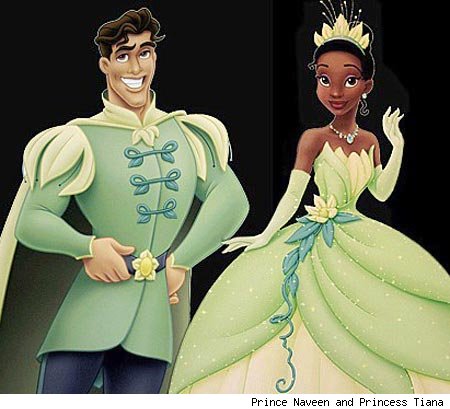
This result left me with several questions. Why is the only princess with "attitude" the black princess? Is this some kind of comment on the personality of black people? Also when the picture popped up I immediately realized that her prince is white. Is it too progressive for a black princess to have a black prince? Are black males still so under stereotype that Disney does not believe society at large can see a black male as a charming and perfect prince?

Thursday, August 27, 2009

Alternative Stories


Today in class several people brought up "alternative stories" or "spoof stories" of certain fairy tales. These included talking about the Brandi version of Cinderella as well as several funny versions of certain tales. This made me remember and think back on a book my mom had when I was a kid called The Stinky Cheese Man and Other Fairly Stupid Tales by Jon Scieska. I distinctly remember loving this book and laughing at the silly takes on the fairy tales I knew by heart at this point. I marveled the amazing illustrations by Lane Smith which made the silly characters come to life almost as if they were jumping off the page and into my lap. Our discussion today reminded me of this book and the alternative stories in it, maybe these stories have some insight into the culture behind fairy tales and the deeper meaning of the stories?

Tuesday, August 25, 2009

First Impressions

I was so excited upon reading several weeks ago that a seemingly boring class (ENG-102) was going to be taught from a new and exciting perspective. I have always loved fairy tales and have been an avid reader of them since receiving my first book of them around age seven. I distinctly remember the book, shiny blue cover, picture of a beautiful castle on the front, and the edges of all the pages were a bright metallic gold. It was the kind of book that looked as though it held magic inside, and in fact it did. For years I was captivated and transported to worlds I could only find in books where prince charming actually existed and animals could talk, witches were sometimes bad and sometimes good, and the hero always triumphed. These were the innocent tales of my youth, and innocence I now wish could be as easily obtained as it was lost. I am looking forward to looking at these stories again from and older more knowledgeable perspective and to find what wisdom and magic they hold for me now.